
· By Angela Seto
Getting Nervous About Winter Survival
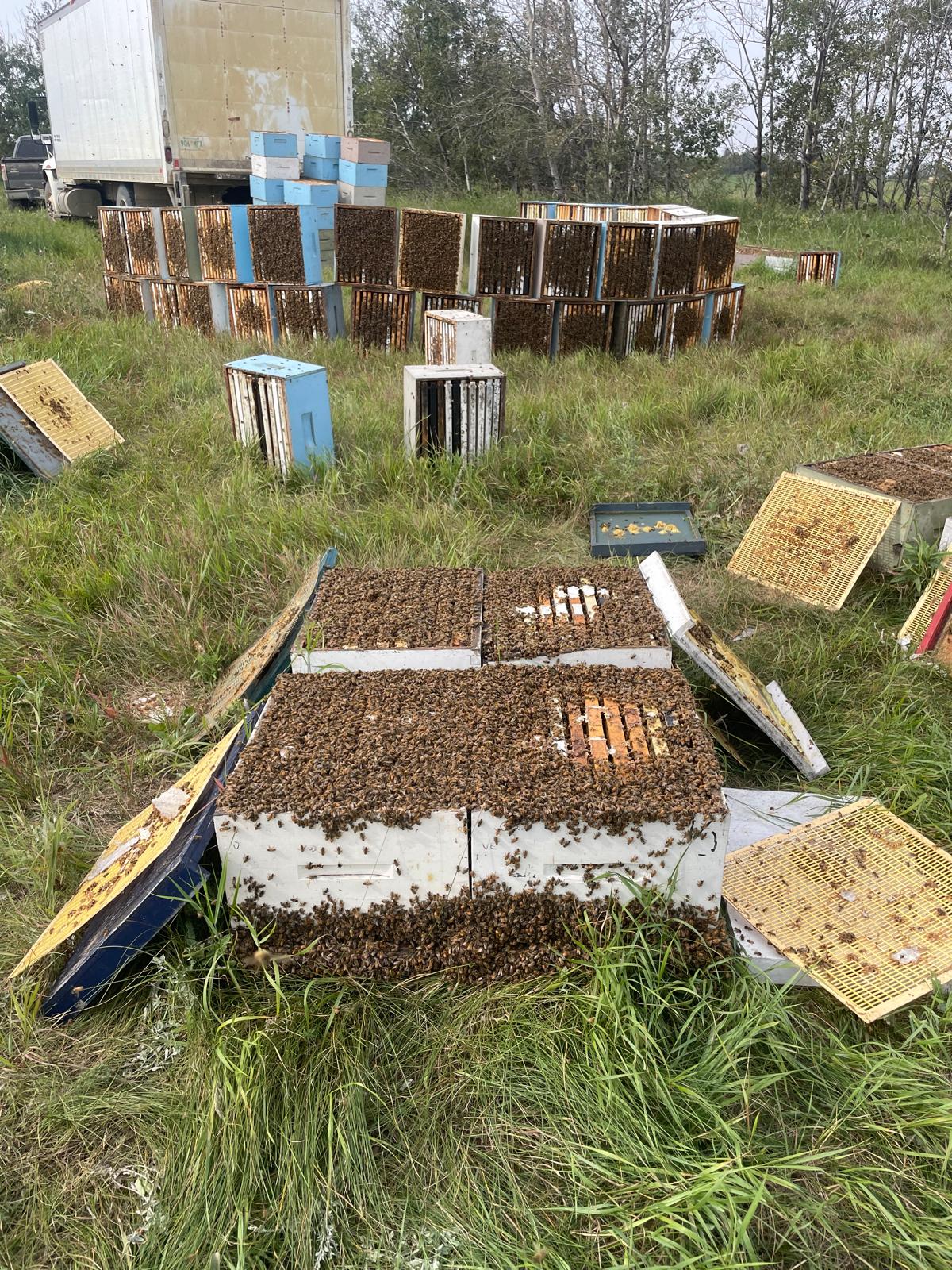
A group of strong hives bursting with bees (front), right after we removed the honey boxes (back row) in late summer 2025.
What's new on the farm:
It's a moving target when we start the bee season, because, like all farming, it's weather-dependent.
We've been watching the temperatures on Vancouver Island to see when it starts warming up.
If it's too cold, you can't open the hives, and they aren't going to be very active anyway.
When it starts to warm up, the bees become more active.
We're also getting reports from our friends who are checking the yards on how things are blooming in the fields and on the trees.
Andrew has decided that next week it will be warm enough to start opening the hives.
The first order of business will be getting a count of hives that survived.
A good survival rate is about 85% (that's a 15% loss). This is a sustainable level that you can manage within your own operation. You can split your surviving hives to create new ones to cover that amount of loss, without causing any strain on the hives.
The reality is, the average losses each year for beekeepers in Canada and the US is increasing.
Last season, Canadian and American beekeepers saw an average loss hovering around 40%.
In 2023 and 2024, the average loss was between 32–37%.
Every year, keeping bees alive through the winter gets harder. Bees now face more problems than before. They deal with more diseases, more pests like Varroa mites, and crazy weather like very cold snaps or long dry spells.
Back when Andrew's grandfather kept bees, things were much easier. Strong hives, lots of honey, and most bees surviving the winter happened almost every year without much worry.
These days, it's a real art and science to balance all the variables that can make or break you.
Last year, we lost 90% of our hives. It was devastating.
We had two major problems that season. First, there was a drought. Having a drought means the bees have to fly farther and work harder to collect enough food. This wears them out quicker and can weaken their immune systems.
The quality of the food is also lower because plants need water to make nectar and pollen. Drought-stressed plants make weaker nectar and less pollen.
The second culprit was the Varroa mite. The treatments that we used the previous fall had failed, and the mites had done a number on the hives. The bees, already stressed from the drought conditions, now had to contend with the mites. They eat the bees' fat bodies, suck their blood, and transmit diseases, which weakens them more.
We were able to get rid of all the mites before winter, but by then the damage was done. The bees were too stressed and sick, and by spring, they didn't make it.
Andrew knew that it wasn't looking good going into winter, so he had ordered packages of bees from New Zealand to arrive in the spring.
Luckily, he made that call, because without those new bees, we would only have had a handful of hives in spring 2025.
He spent the 2025 season learning from all the mistakes and lessons he could, and ended up turning those bee packages into booming, strong hives.
Those hives were healthy, they made a ton of honey, and they were STRONG in the fall and going into winter.
This year, Andrew did not order any bee packages to cover potential losses.
We're feeling pretty good about how things will look this spring, but of course, you NEVER know. So keep your fingers crossed for us as we check on them in the coming weeks!
Honey Garlic Glazed Salmon
I spoke with two customers this week who told me that they use our Spicy Honey on salmon. I knew it was a sign to bring back this recipe we shared a couple years ago.
It takes less than 30 minutes and is packed with flavor.
You can use plain honey and add sriracha as it says in the recipe, or make it easier with a jar of our Spicy Honey!
Try out the recipe at The Chunky Chef!