
· By Angela Seto
Two weeks until we find out if the bees made it
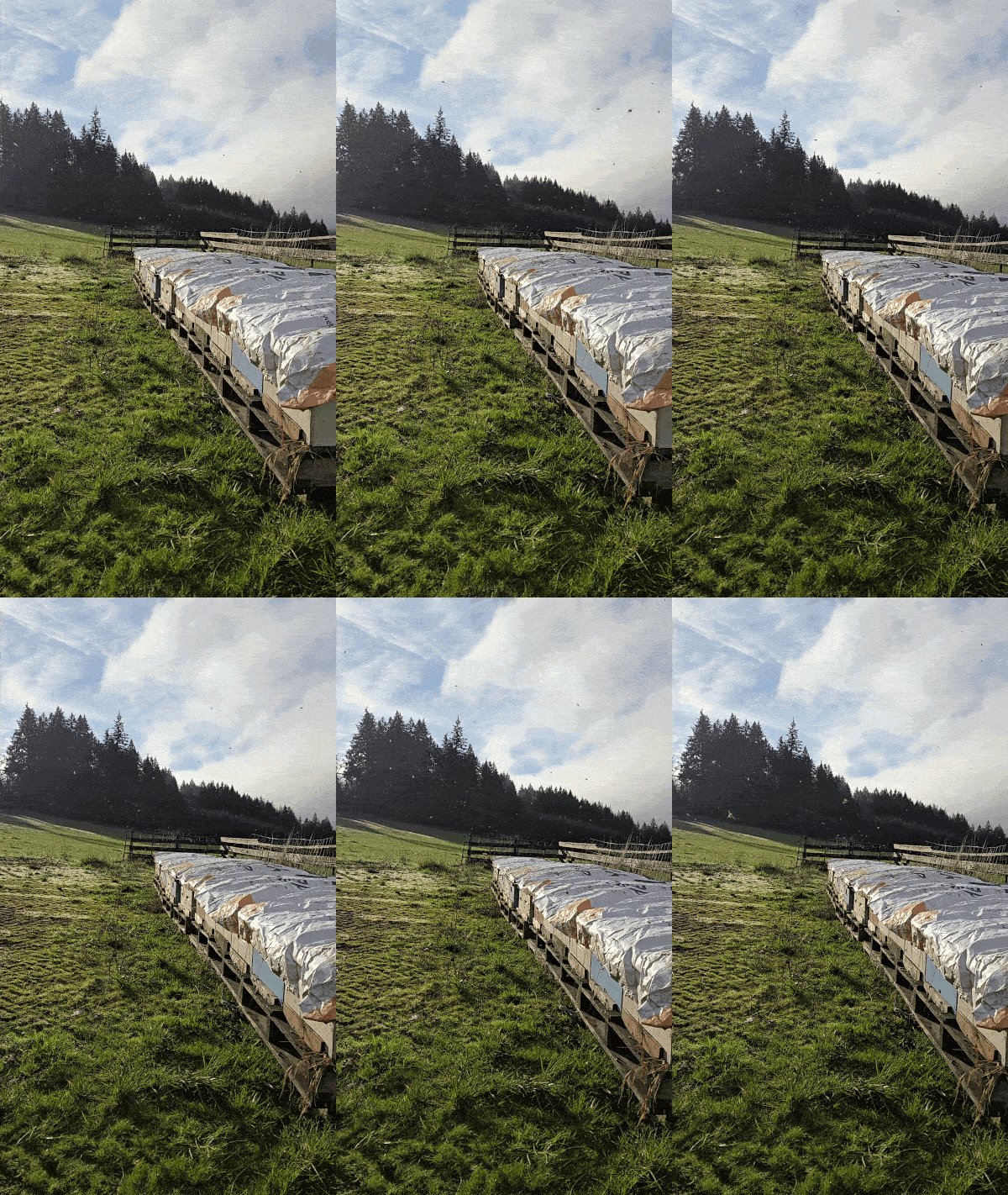
Sunshine hitting our hives at one of our Vancouver Island winter yards.
What's new on the farm:
It's hard to believe, but we are only a couple of weeks away from starting the 2026 bee season.
If it seems early, well, it would be for a Saskatchewan beekeeper!
Here in Saskatoon, we are still sitting under a couple of feet of snow.
Many years ago, our hives would be sitting under a thick insulating wrap, buried under snow.
You wouldn't peek at the hives until you had a warm, sunny day in late March or early April.
Even then, we would wait until late April to unwrap the hives.
And the first major food source doesn't appear until May, when the dandelions bloom!
But for the last 7-8 years, our hives have spent their winters on Vancouver Island.
They aren't under snow (although it has snowed before!).
Spring is much earlier on the West Coast, which means the first blooms, like crocus, are already beginning to flower.
The temperature and the blooms coincide with more activity from the bees.
They'll begin foraging for fresh food as soon as the weather is right, and it can be as early as now!
For the past few weeks, Andrew has been getting things ready for the new season.
Repairing trucks and equipment, ordering food supplements.
Making sure we have enough boxes and supplies, and staffing our beekeeping crew.
In less than two weeks, he'll drive out to Vancouver Island and set up shop for the next few months.
Arriving on Vancouver Island in the spring is nerve-wracking for us.
Throughout the winter, we check on the yards to make sure everything is intact, but we don't touch the hives.
That's because it would do more harm than good to disturb them during that period.
But as temperatures warm and the flowers get closer to blooming, we can start opening the hives to see how they are doing.
All the work we put in last summer, fall, and even early winter this year goes towards their winter survival.
We've experienced years where 90% of the hives have died.
We've also had years where 90% have lived.
There are so many diseases, pests, and other challenges that honeybees face.
We know that we can do our very best, but we can't take anything for granted.
So we're eager and nervous to see how the hives look in a couple of weeks!
It seems like most of what we do, besides harvest honey, is focusing on making sure the bees survive the winter.
But did you know it wasn't always that way?
Honeybees aren't native to North America. They were first brought over in the early 1600s by European settlers.
Back then, beekeeping equipment looked very different from the hives we use today.
Beekeepers used hives called "skeps," which are dome-shaped straw baskets, or "gums," which were hollowed-out logs.
These mimicked the type of natural structures that wild bees would go into to build their hives.
The bees would build the honeycombs with beeswax in the skep or gum, and fill them with honey.
To harvest the honey, the beekeepers would gas the hive with sulphur or cyanide, killing all the bees.
Then they would take the combs out of the hive to get the honey out.
Since the combs were only made from thin beeswax, they were fragile once removed.
They would get crushed and strained to get the honey out.
Not very nice for the bees! And since the bees were gone, there was no need to try to get them to survive the winter.
They would replace them with new bees that they purchased the following season.
In 1852, a man named Lorenzo Lorraine Langstroth patented an invention that would change the industry.
He designed a hive with removable and reusable honeycomb frames.
This meant that the honeycomb frames could be taken out of the hive to harvest the honey, and then put back in.
This was a huge change that allowed beekeepers to manage their hives more sustainably, and better for the bees.
Overwintering the bees became more possible.
The frames didn't need to be destroyed when they wanted to harvest the honey, or even to check for diseases and pests.
It also allowed the hive to contain more stores of honey for the bees to consume over the winter.
Soon after, research was being done on how to insulate the hives, have proper wind protection, or even winter indoors.
So by the 1950s-1970s, many North American beekeepers had transitioned to overwintering their colonies.
It turns out, hives that survived winter were even more productive the following season, compared to getting new ones.
Now, the entire industry relies on successfully wintering their bees each year.
Beekeepers and businesses have invested time and money into research, new equipment, and supplements.
They'll do all sorts of crazy things to make it work.
Including taking them halfway across the country to Vancouver Island!
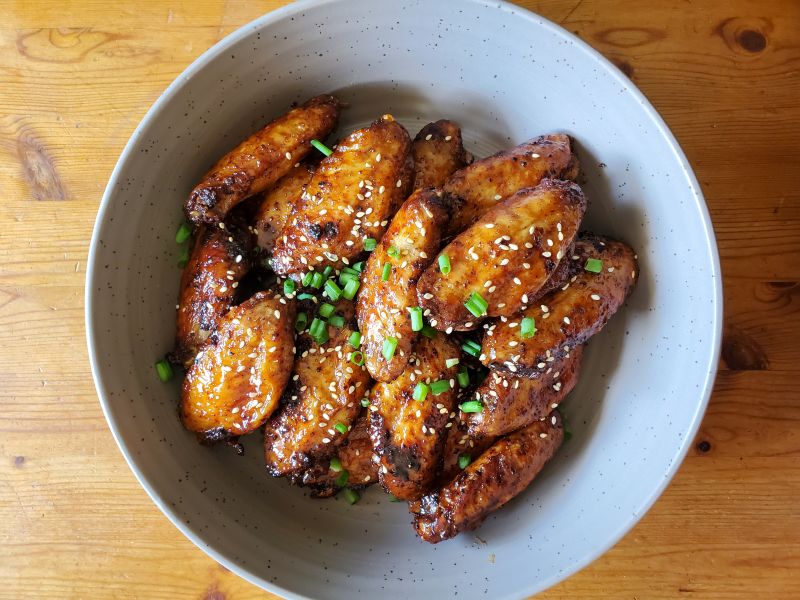
Try our hot honey chicken wings recipe!
Hot Honey Chicken Wings
After a couple of weeks of being sold out, we are back in stock with our Spicy Honey!
This reminded me of our hot honey chicken recipe, which is one of my favorite ways to enjoy our chili and garlic infused honey.
This is a fun and easy way to get a huge amount of flavor with very little effort. Who doesn't love sticky, sweet-and-spicy wings?
Ingredients:
- 2 lbs chicken wings
- 1 tsp kosher salt
- 1 tsp black pepper
- 1 tbsp paprika
- 1/4 cup Spicy Honey
- Sesame seeds and diced green onion for garnish (optional)
Directions:
- If you're using an oven, preheat to 400 F. If you're using an air fryer, no need to preheat.
- Place chicken wings in a medium bowl.
- Season wings with salt, pepper, and paprika. Toss wings to evenly coat.
- For the air fryer: place chicken wings in a single layer in an air fryer at 400 F. Cook wings for 15 minutes, then flip over and finish cooking for another 10 minutes until golden and crispy. Depending on the size of your air fryer, you may need to cook in batches.
- For the oven: place wings in a single layer on an aluminum foil-lined baking sheet. Turn the wings every 20 minutes, cooking for 50 minutes or until golden brown and crispy.
- Remove the wings and place into a clean bowl. While the wings are still hot, add the honey to the wings. Toss wings until the honey has melted and evenly coated the wings.
- Garnish with sesame seeds and green onions and enjoy!
See the recipe on our website here!
Watch us make the recipe on our Instagram!