
· By Angela Seto
Can bees winter in Saskatchewan?
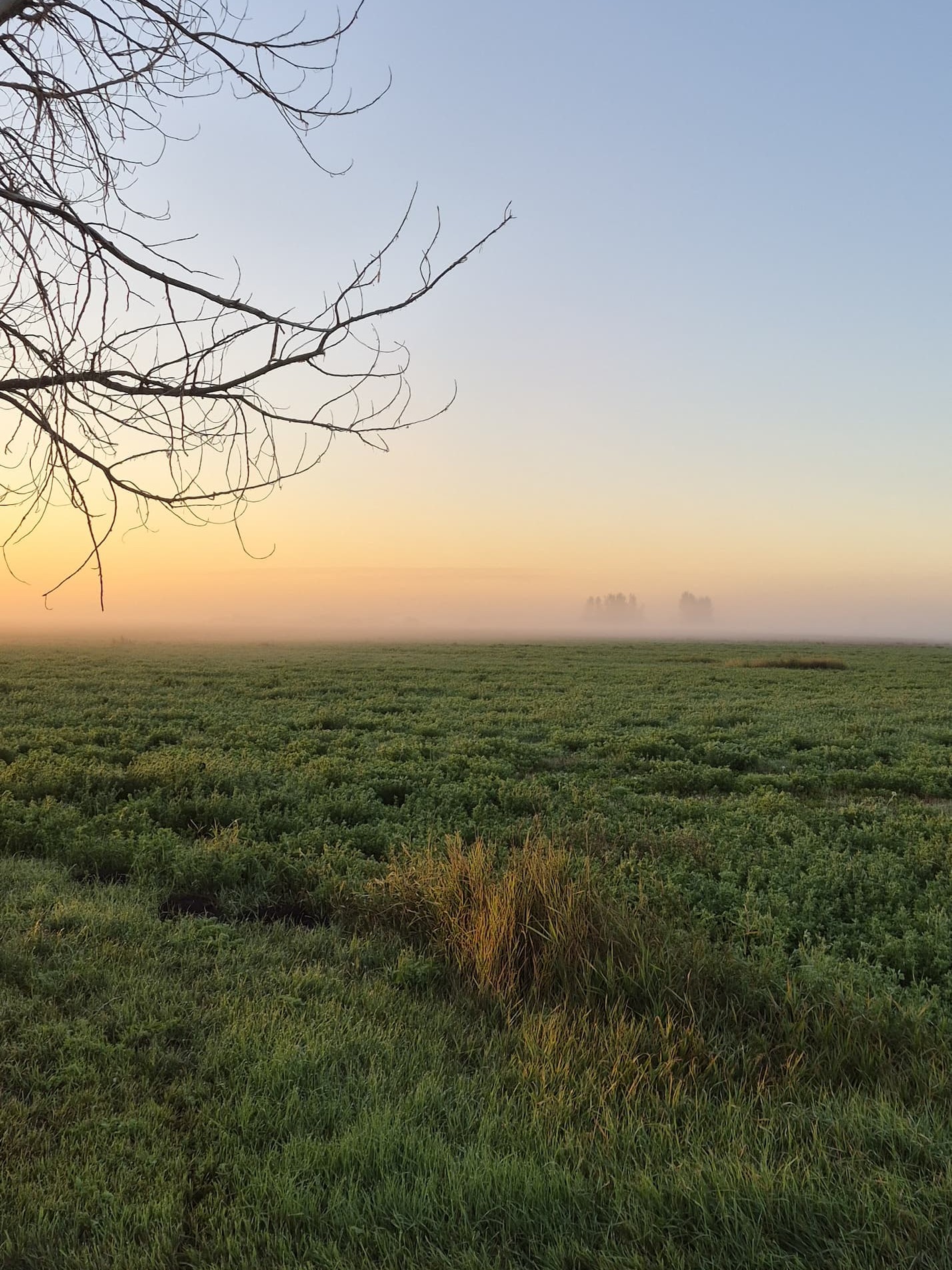
A fall morning fog hovering over our alfalfa fields
What's new on the farm:
Every week when I sit down to write this letter, it feels like time has raced by. Here we are at the end of September, and it's almost spooky season. We are also nearing the end of bee season on the prairies.
We have enjoyed a brilliantly warm, enjoyable start to fall, with temperatures we wish we saw during summer!
I struggle with this season each year because I have a hard time with the change to cooler temperatures. But when I step back and look around, autumn in Saskatchewan is quite beautiful.
This year, with the warmer temperatures, the leaves have been hanging on to the trees but transforming into their lovely autumn shades.
We've even seen some flowers blooming again, like the sweet clover in our yard.
We're still poking away at our winter prep tasks, so I thought I'd pull some questions from the inbox this week related to our winter activities.
From Les: If you don't send the bees to Vancouver, can they stay alive over the winter?
From Jeanne: I have a question… would the hive live in large green houses [in the winter]?
I'll address these both together. Yes, bees can winter in Saskatchewan, but you have to prepare them for it! In fact, most Saskatchewan beekeepers keep their hives in the province. There are different strategies for wintering hives here.
When we used to keep our hives in SK, every fall we would take the hives in groups of 4 and push them together so they were in contact. That way the heat of each hive could help warm the others (like people huddling together in the cold!). Then we would wrap the hives in a thick insulating blanket with gaps at the entrances so the bees could fly out on mild weather days. The openings would help the bees ventilate the hives. Contrary to what you might think, it's usually not the cold temperature itself that kills bees in winter, but condensation. If the bees get wet inside and then cold, that will chill them to death.
Other beekeepers also have wintering sheds. They will take all their hives from the outyards and move them into a building for the winter. These buildings usually don't even need to be heated, because the heat that all the hives generate together in the building can be quite warm. The building typically will have lots of fans and ventilation to help regulate the building temperature. The fans are critical to ensure the hives actually don't overheat when they are all stored together!
So if the bees can overwinter, why do we move them to Vancouver Island?
The main reason we like going to Vancouver Island is so we can have an earlier spring. There isn't a lot of activity in Saskatchewan until the major floral sources like dandelions start blooming in May. On the island, that happens as early as the end of February. Getting this extra time to have the bees gather natural forage is a benefit for our bees. It helps them start growing sooner and hopefully have stronger populations by the time honey season happens in the summer.
From Penny: Do you still have lots to do in the winter, or do you get to take a break?
The off-season is quieter for the bee crew, but with our Vancouver Island move, our winters are a lot shorter than they used to be! In Saskatchewan, you would get your hives wrapped up in mid-October and not look at them again until late March or April. But with the Vancouver Island piece, our off-season is usually early November to mid-February.
Beekeeping is a labour-intensive, physical job. Most of the work is manual, not machine-based. So by the time the season ends, our bodies are pretty worn down. The winter gives us some time to recover, take time off, fix equipment, order supplies, and plan for the next season.
Many beekeepers sell a bit of honey themselves, but send most of their honey to a packer in bulk, who will then package and sell the honey in retail. That way they don't have to worry about packing their own honey in the winter.
For us, we pack and sell all our honey ourselves. So all year long, we are also busy with creaming and packing our honey and making our honey caramels for our wonderful customers!
Thanks to everyone who continues to write to us and give us feedback and ask questions. We read every email and appreciate the time you take to tell us what you think!
Roasted Honeynut Squash with Hot Honey
Roasted squash is one of the coziest things I love to eat in the fall. It's both sweet and savory, and creamy. It feels so decadent to eat when you want something filling and satisfying but also good for you.
This recipe calls for a honeynut squash, but you could do it with a butternut, which is more common. It has so much flavour with the hot honey and goat cheese combination.
If you were able to get your hands on the last jars of our Spicy Honey, you could use it here. Or, the recipe also shares how to make your own hot honey from regular plain honey. You can skip the radicchio leaves if you don't want to make it too fussy.
Check out the recipe at Camille Styles.