
· By Angela Seto
First harvest... but nature has other plans
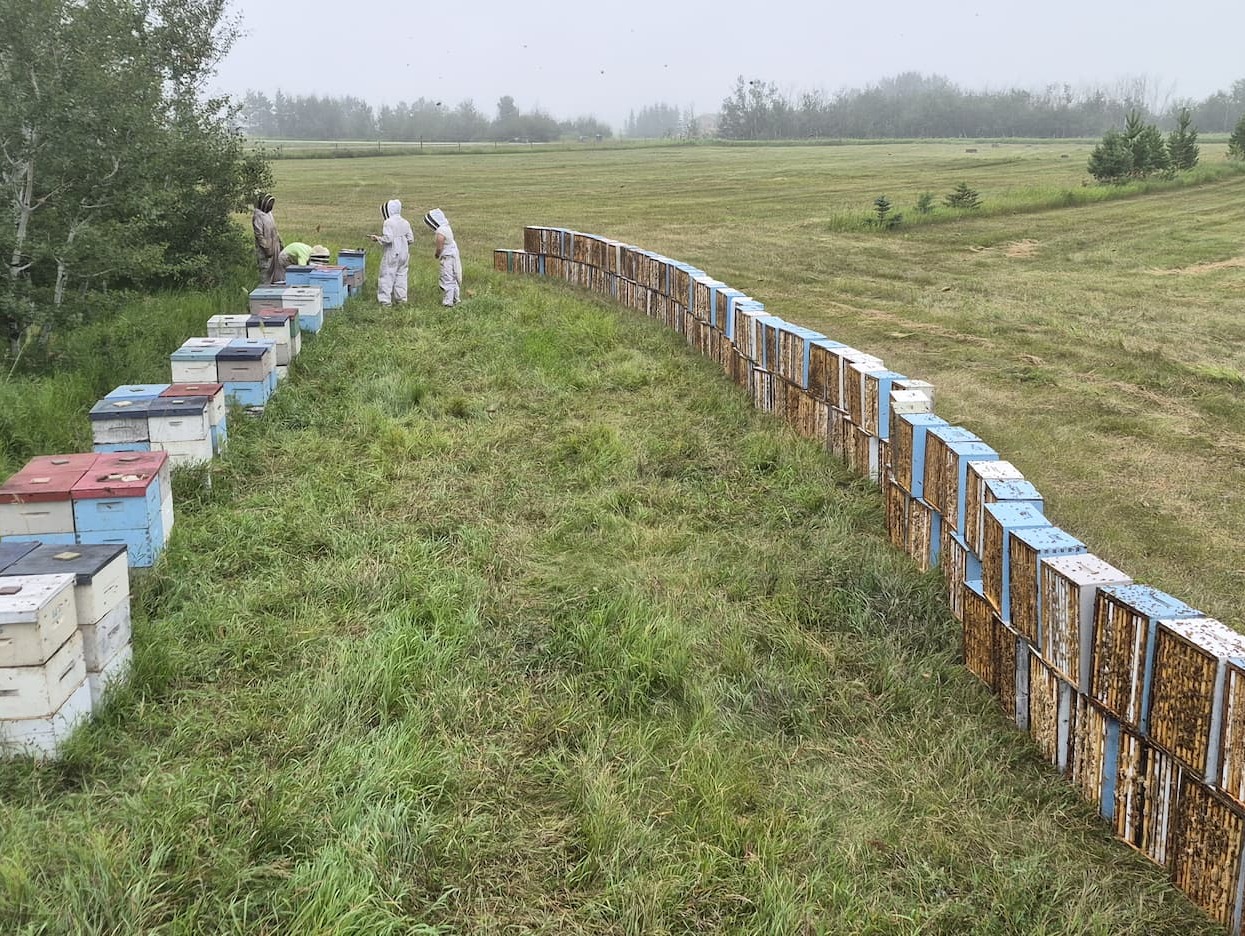
Harvest time: honey boxes lined up on the right, ready to get the bees blown out so they return to their hives on the left.
What's new on the farm:
Whew! Summer is really here if you're a beekeeper in Saskatchewan.
That's because this week we finally pulled off the first boxes for harvest!
The season is starting to turn out much stranger than we expected, and during harvest we are noticing issues that we've never personally encountered before.
Since Andrew and I joined the family honey business, we have had drought every single year.
So most of the challenges we've faced so far have been due to not getting enough moisture. No moisture, no nectar. No nectar, no honey.
This year has been the first year that we've gotten way more rain than we are used to. Some fields were flooded after seeding, and they didn't have enough time to reseed the fields.
And the relative humidity outside is around 75-100% every day.
What does this mean for our bees?
We never thought moisture could be a problem for us. With all the rain supporting all the crops, we were anticipating a huge honey flow to fill up our honey boxes.
But it turns out, there is such thing as too much moisture.
The past two weeks, Andrew has observed a lot of variability in the amount of honey he's seeing in the hives.
His regular production hives with their big populations are bringing in tons of honey. There was a yard where each hive produced 150 lbs each already, and they are still making more.
But other hives, in particular the new hives (splits) that he made this season, are producing less honey than he expected for their size.
So what's happening?
When flowers get too much rain, the nectar turns watery. The sugar concentration gets diluted.
Bees like sweet nectar best. They have special taste receptors on their antennae, mouth, and feet. These receptors help them detect how sugary the nectar is before they even drink it up.
Watery nectar has less sugar in each drop. Some bees detect the lower amounts and decide not to bother with the effort. Other honeybees are willing to collect the nectar, but they have to visit more flowers to get the same energy. They work much harder for less food.
Back at the hive, bees must dry the watery nectar into honey. That takes a lot of fanning and energy. When the air is already damp, drying takes even longer.
You can start to see how this is a problem for the hives. The bees are too busy processing watery nectar. They are ending up with smaller quantities of honey for the effort they are putting in.
The hives with stronger populations are able to handle this better because they have enough bees to do the work.
But the splits have smaller populations and aren't able to keep up