
· By Angela Seto
Can you make honey without bees?
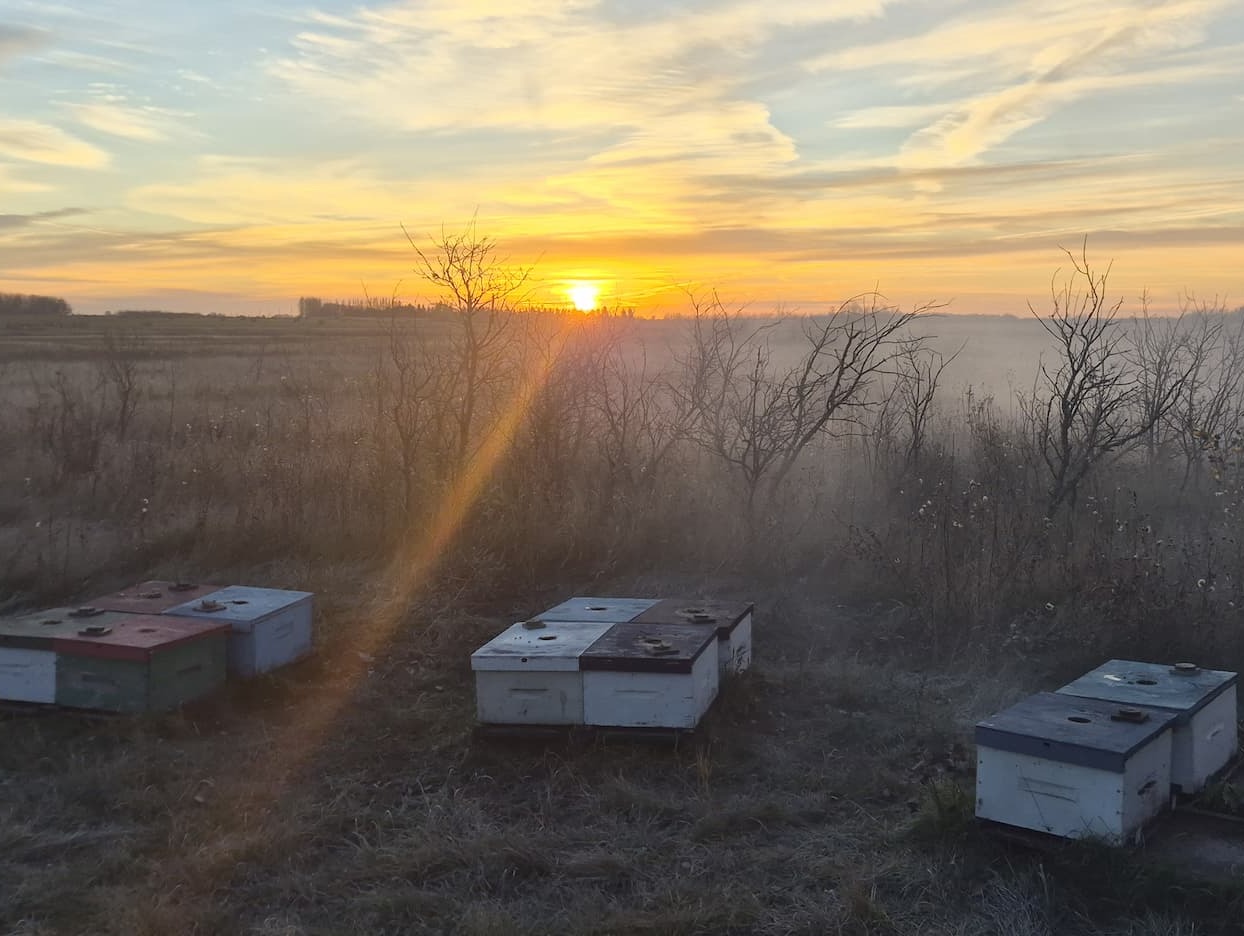
Sunrise over a layer of fog at the bee yard
What's new on the farm:
The temperature has finally turned for good here. The sky is still dark when we start up now, and we get to watch the sun rise as we set up each morning.
This past week, we've been collecting the hives that are in our outyards and bringing them back to our home yard. Once they arrive, Andrew and the crew check them over to see their population sizes and make sure they have enough food. Then they place a sheet of insulation under the lid, and wooden gates are hammered into the entrances to help keep in the heat.
Then it's cleaning up the yards, putting everything away, and making sure the farm is ready for winter.
Have you heard of lab-grown honey?
As the season closes, I've been reading about companies trying to make honey without bees. First they were working on lab-grown meats, then dairy, and seafood. So I wasn't surprised to read that honey is a target too.
These companies are trying to produce a result that is the same as real honey. The idea is that if people can get honey this way, we might not need as many managed hives. That could leave more room for the native bees. It's an interesting thought, but the execution doesn't quite make sense to us.
How lab "honey" is made.
To make honey, bees collect nectar from flowers and process nectar into honey using special enzymes in their stomachs.
To skip the bees, there are two ways that these companies try to produce "honey."
Some blend refined sugars (mainly fructose and glucose) and other compounds from plants that bees would normally visit. These are mixed with water, a little gluconic acid (which also occurs in real honey), and plant extracts for flavor and minor compounds.
They are able to copy the basic makeup of honey with this blend to make something that mimics it. These products are currently available on the market in the US but not in Canada.
Others grow special microbes in big tanks that make the same enzymes bees use, then combine those with sugars to convert it into "honey." These products are still in development and are not available to buy yet.
Can it replace real honey?
A lab version that aims to be the same every single time is trying to give you an experience closer to the honey you already see on most grocery shelves. The big packers blend honey from different places so the color, texture, and taste stay the same from jar to jar.
It makes a reliable product, but it is not the same as a small-batch honey that the bees made on their own. There is no more nuance, variety, or uniqueness that you would get from any unpasteurized honey you can find in the world.
On top of that, the lab version is really just a mix of refined sugars that have been flavored to taste like honey. You don't get any of the natural benefits from what the bees put inside of it.
Ironically, honey fraud is rampant in the world from middlemen and processes who have already figured out how to mix sugar syrups together to make them taste like honey. Maybe they should have just marketed it as "plant-based honey" like these companies, instead of putting all the work into hiding it!
Is it more sustainable? Are they saving the bees?
These companies also say that lab honey could help native bees by reducing the number of managed honeybees. Fewer beekeepers might mean fewer hives competing for flowers in certain spots.
What this ignores is that the decline of native bee populations is mostly caused by their loss of the places they live and feed.
Big farms and spraying that clears field edges take away the wildflowers, the bare ground, and the nesting spots. Large fields of a single crop also leave little for native bees once the short bloom is over. Urban development also puts pressure and removes habitats.
This does more harm than any extra honeybee colony. Taking managed hives away does not put those flowers and places back. The native bees still need somewhere to go and something to eat.
On top of that, using a blend of refined sugars to save the native bees is hugely ironic. Industrial sugar production relies on monoculture farms that wipe out native habitats and floral diversity. They also use huge amounts of pesticides and herbicides.
When you look at what goes into making honey instead, there is a huge gap in sustainability. Bees turn the nectar they collect into honey with few external inputs. You don't need fertilizer or irrigation. The flowers are already growing in the fields and along the edges. The bees do the rest of the work.
Honeybees aren't just for honey.
Finally, these companies don't realize that honey isn't the only output of honeybees. In North America, 20-30% of crops benefit from honeybee pollination. That's fruits and vegetables we eat every day.
If you reduce the number of beekeepers and managed beehives, you reduce the amount of food that gets produced.
As an aside, it also makes my head shake when I see "vegan" honey alternatives on the market that try to save the bees by making a "honey" syrup that's usually made from apples. Which are mainly pollinated by honeybees.
We are curious to see where this technology goes and what it might look like in a few years. At the same time, we keep coming back to the same thing we have always cared about. It is the bees, the flowers they find on the yards, and the honey that comes from a specific place at a specific time. That is the version we know, and the one we want to keep making for you.
Have you tried lab-grown food before? Would you?
Sticky Honey Lemon Chicken
I love a sweet caramelized honey sauce in a savory dish. This is a sticky lemon chicken version that is perfect on a bed of rice.
Add this for a bit of variety on your weeknight meal line up. The leftovers are great for lunch the next day!
Check out the recipe at Gimme Some Oven.