
· By Angela Seto
What if you lose a queen?
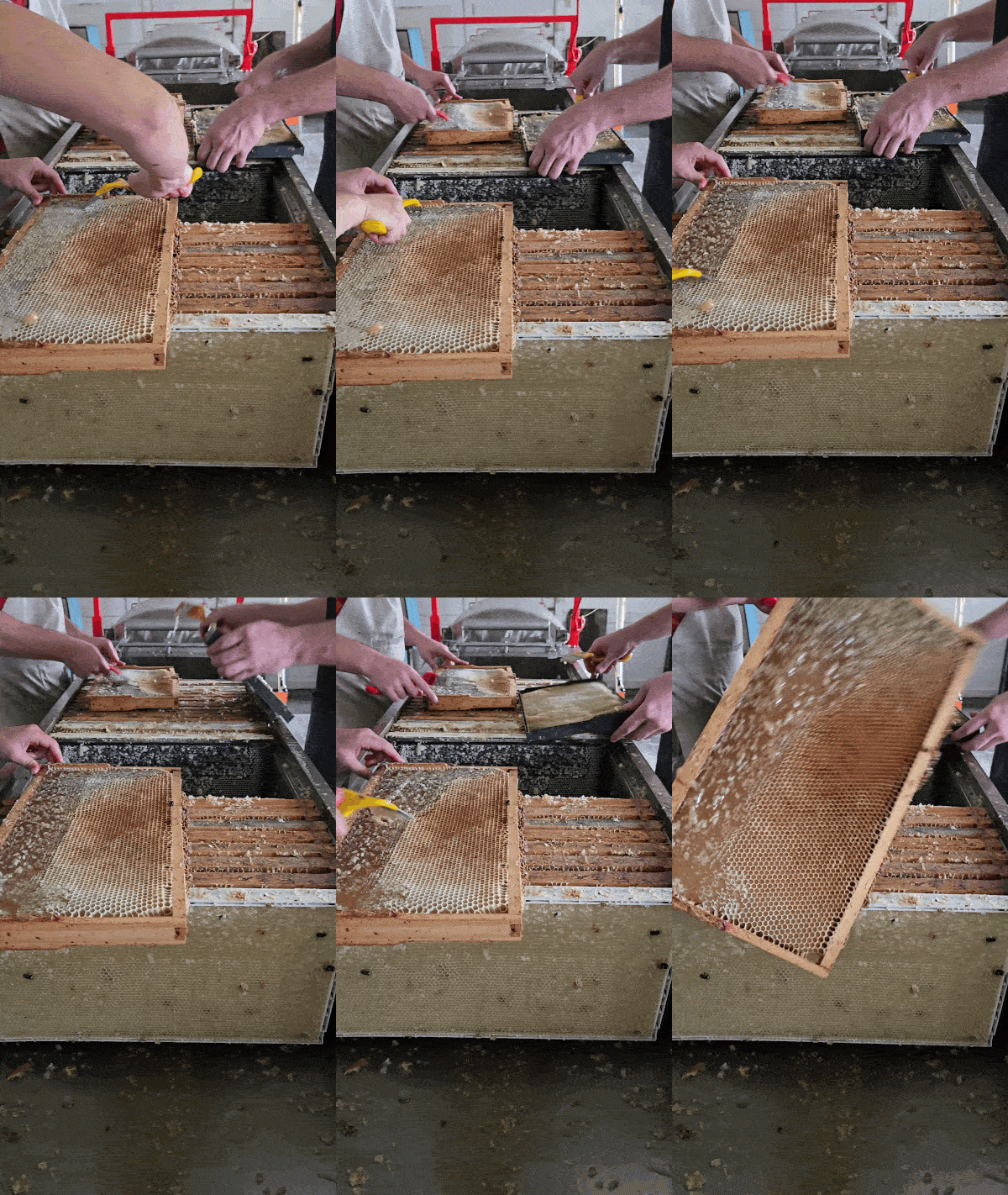
Scraping frames of honey before loading them into the extracting machine.
What's new on the farm:
We are getting through the back half of harvest now as we approach Labor Day weekend.
The honey coming in is winding down, and we have already started some fall jobs.
Andrew has started making more new hives that he will soon prepare for wintering.
These hives don't contribute any honey this year, but the plan is for them to make it through winter so they can produce honey next year.
I have been continuing my weekly task of making queen bees. It's always handy to have some queens around if you run into a hive with a failing queen or has gone queenless.
When a hive is missing a queen, you can usually tell as soon as you open a hive.
The colony is restless and agitated. They buzz louder, and the bees move around in erratic, frantic movements. Watching the bees, it's like chickens with their heads cut off.
How does the hive know that their queen is gone?
Most of the communication in a hive happens through pheromones. These chemical signals are passed throughout the hive from bee to bee. In honeybees, these are often experienced as scents.
The queen has her own particular pheromone. As she walks around the hive, she brushes up against other worker bees. This passes on some of her pheromones. As those bees brush up against other bees, the pheromones pass along. And on and on until her pheromones circulate throughout the hive so all the bees know that she is present.
When the queen is gone, the honeybees might not notice right away. But quickly, her pheromones stop spreading through the hive. Eventually they can't smell her anymore. At this point, they start to get worried about their missing queen.
The first thing the honeybees will do is try to make more queens. These are called emergency queens. They find very young worker larvae and start to feed them royal jelly. They will also change the shape of their cell chamber to accommodate the larger size that a developing queen needs.
If they are successful, one or more virgin queens will emerge from the cells about 10 days later.
Once the virgin settles for a day or more, she is ready to go on her mating flight. She takes off from the hive to find some drones to mate with.
A queen will mate with many drones. This provides a lot of diversity in the sperm she carries, so each bee she lays won't be the same. This means that while all the bees in a hive have the same mom, there are many different dads. When you look in a hive, you can see a lot of variety in the color and stripes of each bee.
Once the queen mates, she has to make her way back to the hive. This is the risky part. If it's too windy, she can struggle to find her way back. Sometimes when we're raising our own queens, their mating flights happen to fall on a windy day. On those days, many of the young queens don't make it safely back to the hive.
Predators are another risk. If there is a bird with a good eye and a hungry belly, a queen can get snatched for lunch and never make it home.
If the queen doesn't make it home, and there are no other developing queens on the way, the hive has run out of chances to replace her.
You see, only larvae of a certain age can develop into queens with the right diet. As they get older, they are no longer able to switch from a developing worker into a developing queen.
And the source of more larvae is, well, a laying queen!
Since queen is gone, there is no source of new eggs and larvae for the hive. The brood that the previous queen laid starts to age out until eventually they all hatch into workers, and there is nothing left.
This is where things start to get desperate for the hive.
Without more workers, there is no one to replace the ones that age out and die. So the hive will eventually dwindle until there is no one left.
To try to keep the population going, the worker bees will start to lay eggs. If the hive gets to this point, unfortunately, it's usually doomed.
"But Angela, workers can't lay eggs?"
The reason why the queen is so special is that she can lay both fertilized eggs and unfertilized eggs. The fertilized ones turn into the female worker bees. The unfertilized ones turn into male drone bees.
Worker bees actually have the organs to lay eggs, but only unfertilized eggs. This is because they don't have the organs that store sperm, and they haven't mated to receive any sperm.
Typically, workers never lay eggs if everything is running properly in a hive. The queen lays eggs, which grow into the developing brood. This brood actually gives off its own pheromone.
This scent circulates throughout the hive as the workers care for the brood. And it's this scent that suppresses worker bees from laying eggs.
But once all the brood is gone, and there is no queen, there is no more pheromone to stop this behavior.
So the workers begin to lay eggs in a desperate attempt to keep the population going.
The problem with this is that all the eggs are unfertilized, so the only bees that hatch are drone bees.
And unfortunately, drone bees can't do much other than mate! They don't work, they can't even feed themselves. So they are no use to the hive.
If you catch a queenless hive before the workers start laying, you have a pretty good chance of putting a new queen in that will be accepted by the colony.
But if the hive is full of laying workers, it's usually hopeless. At this point, something in the workers changes, and they are unwilling to accept any new queens. Often, they will be very aggressive and kill any new queen you give the hive.
At that point, the hive is lost. So it's very important for beekeepers to regularly check their hives. For diseases, for food stores, and to make sure the queen is alive and kicking. Because losing a hive is a real gut punch!
Sesame Honey Cookies
Something about this August weather we are getting here in Saskatoon is starting to shift me into cozy mode (all the Fall and Halloween decor in the stores might contribute to that too!).
And that means baking cookies and warm lattes!
I love the subtle nuttiness of sesame seeds and I feel like there aren't enough treats highlighting them.
So when I found this Sesame Honey cookie recipe I was pretty excited. The best part is the cookies are chewy and soft thanks to the extra moisture from the honey.
Check out the recipe at Easy Gay Oven.